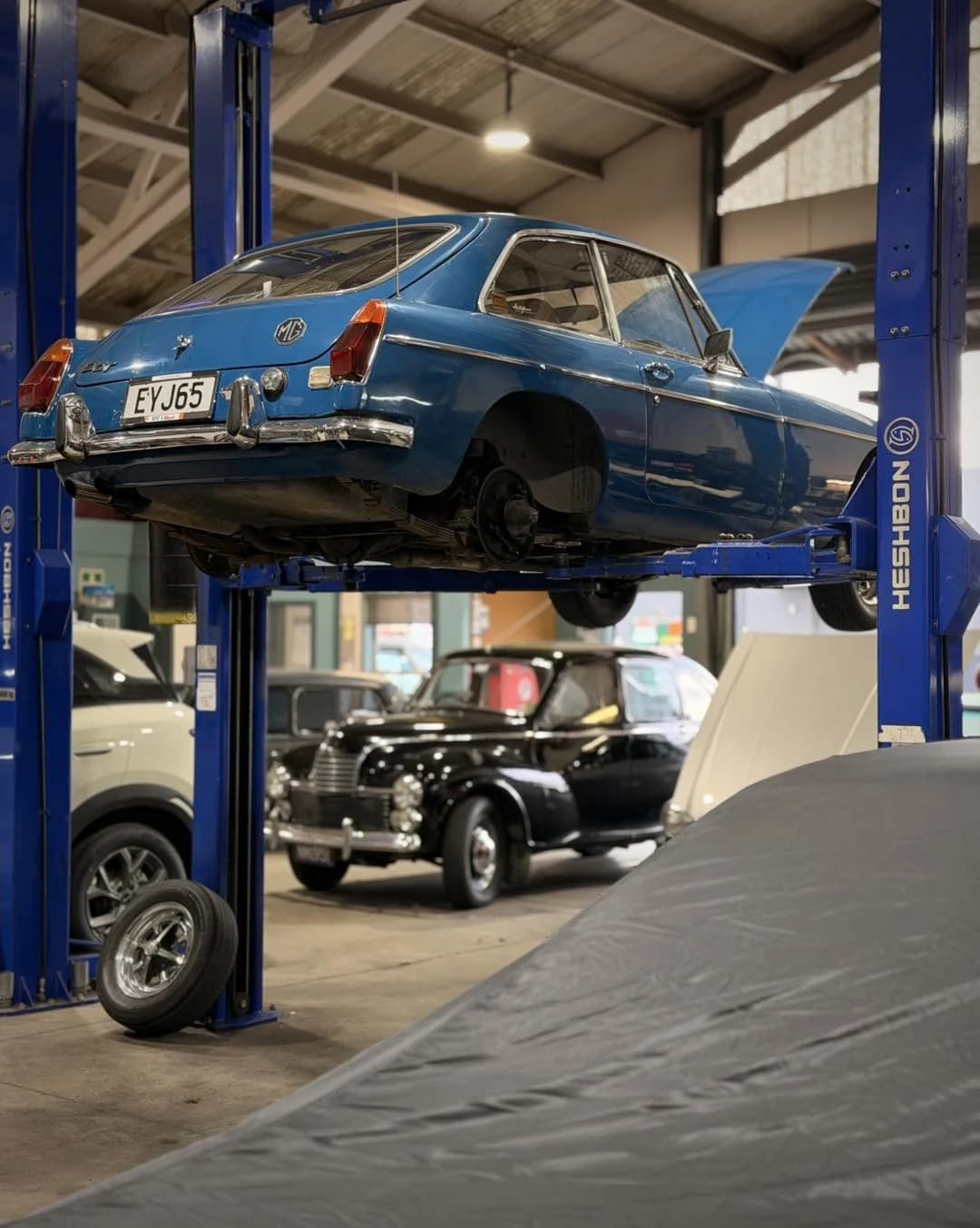
Every workshop has a pile of work customers said "not today" to: tyres at 3 mm, a weeping water pump, pads with a few thousand kilometres left. It used to come back round at the next WoF. Since 1 November 2026, many cars only see a WoF every two years, so that pile needs a system. This playbook covers how to sort deferred work, when to follow up, and SMS and email scripts you can copy.
Updated 18 November 2026. Scripts are examples: change the names, prices and timing to suit your workshop.
Why deferred work matters more now
From 1 November 2026, light vehicles aged 4 to 14 years and registered on or after 1 November 2019 need a WoF every two years instead of every year. From 1 November 2027 that extends to vehicles registered on or after 1 November 2013. A car that came in every year for its WoF might now come in every second year, unless something else brings it in. Deferred work you follow up properly is one of the best reasons for that visit, because the customer already knows about it and you've already priced it.
More on the wider picture in what the WoF changes mean for workshop revenue and keeping customers now WoFs are two-yearly.
Step 1: sort every declined item
| Category | Example | Follow up |
|---|---|---|
| Safety now | Brake hose leaking, tyre below legal tread, steering joint worn | Before the car leaves: explain the risk in person and in writing. Then 2 days later |
| Soon (weeks) | Pads at 3 mm, tyres at 2.5 mm, oil leak getting worse | 2 to 3 weeks |
| Later (months) | Shocks tired, timing belt due at next service, coolant due | 2 to 3 months, or with the next service reminder |
| Monitor | Minor seep, surface rust, a noise you couldn't reproduce | At the next visit |
Write down the condition and a number where you can ("rear tyres 2.5 mm"). It makes the follow-up specific and it's your record if something fails later. If a customer drives off with a safety item declined, note that you told them, how, and when. Our CGA guide covers why that record matters.
Step 2: stay on the right side of the spam rules
The Unsolicited Electronic Messages Act covers commercial texts and emails, not only bulk marketing campaigns. Internal Affairs says some messages aren't commercial, such as factual information about an existing relationship, or confirming a transaction the customer agreed to. A follow-up that's selling them a repair can be commercial, so treat it as one:
- Get consent when you take the booking: "Can we text you about your car's servicing and any work we recommend?" Note the answer. Internal Affairs says you can't reasonably infer consent from a single purchase, and the burden of proving consent is on you.
- Say who you are and how to contact you in every message.
- Include a way to opt out that works, such as "Reply STOP to opt out", and respect it.
Not legal advice: if you send a lot of messages, read the Internal Affairs guidance in full.
Step 3: SMS and email scripts
Safety item, 2 days after the visit (SMS):
Hi Tom, Jo from Westside Motors. Just checking in on the Ranger: the front brake hose we showed you is leaking and could fail. We can fit it tomorrow, $185 incl GST, about an hour. Reply YES to book or call us on [number]. Reply STOP to opt out.
Soon item, 2 to 3 weeks later (SMS):
Hi Priya, it's Westside Motors. When your Mazda was in we measured the front pads at 3 mm. They'll want doing in the next month or so: $340 incl GST for pads and a brake check. Book a time here: [link]. Reply STOP to opt out.
Later items, 2 to 3 months on (email):
Subject: Your Corolla: two things we noted last visit
Hi Helen,
When your Corolla (ABC123) was in on 14 November, we noted two things that could wait a little:
- Rear shock absorbers are tired: $620 incl GST for the pair
- Coolant is due for replacement: $145 incl GST
Neither is urgent, but they're worth doing together with your next service to save a separate trip. Reply to this email or book online: [link].
Thanks, Jo at Westside Motors, [phone]. Unsubscribe: [link]
When they book anything else (SMS):
Thanks for booking in, Tom. While the Ranger's here, do you want us to do the rear tyres we noted in March? $310 incl GST for the pair. Reply YES and we'll have them ready.
What makes a follow-up work
- Specific beats generic. "Your Mazda's front pads at 3 mm" gets bookings. "Time for a check-up!" doesn't.
- Price it again. They've forgotten the number. Give it, GST included.
- One message per item group, not one per item.
- Make it easy to say yes: a booking link or "reply YES".
- Stop after two tries on non-safety items and raise it at the next visit instead. Nagging costs more customers than it wins jobs.
- Load it into the next job. When the car is booked for anything, the deferred items go on the job card so the technician checks them and the service adviser asks.
Step 4: measure it
Track two numbers each month: the dollar value of work declined, and the share of it booked within six months. You don't need an industry benchmark. If the second number goes up after you start following up, it's working.
Deferred work in Hoist
- Declined and deferred jobs stay on the vehicle. At the next visit they show under Deferred work, where you review them and add them to the work order in a click.
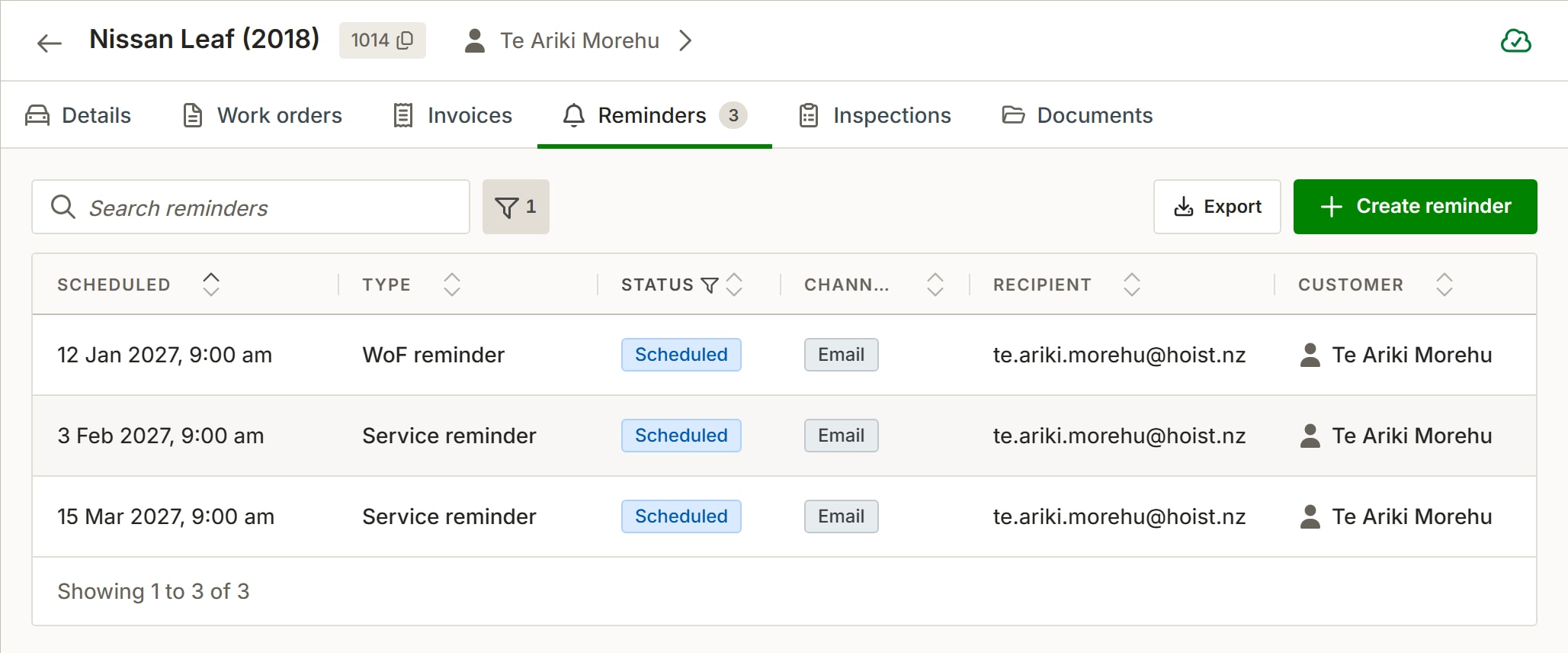
- Service reminders: set a one-off reminder on the vehicle for the follow-up date, alongside the automatic WoF and CoF reminders.
- Two-way texting with templates and snippets, so the scripts above are a tap away. Replies land in a thread against the customer, and STOP and START replies update their texting consent.
- Online approval: when they reply yes, send the estimate link. See our quote approval guide.
Don't lose the work they said "not today" to
Deferred work saved on the vehicle, reminders and two-way texting on one plan. $140 + GST a month, 3 users included. Free trial, no card needed.
Start Free TrialSources
- NZTA, Changes to light vehicle inspections from 1 November 2026 (two-yearly WoF dates)
- Department of Internal Affairs, What anti-spam law means for businesses (scope, messages that are not commercial)
- Department of Internal Affairs, Spam FAQs (consent, inferred consent, identifying the sender)
- New Zealand Legislation, Unsolicited Electronic Messages Act 2007