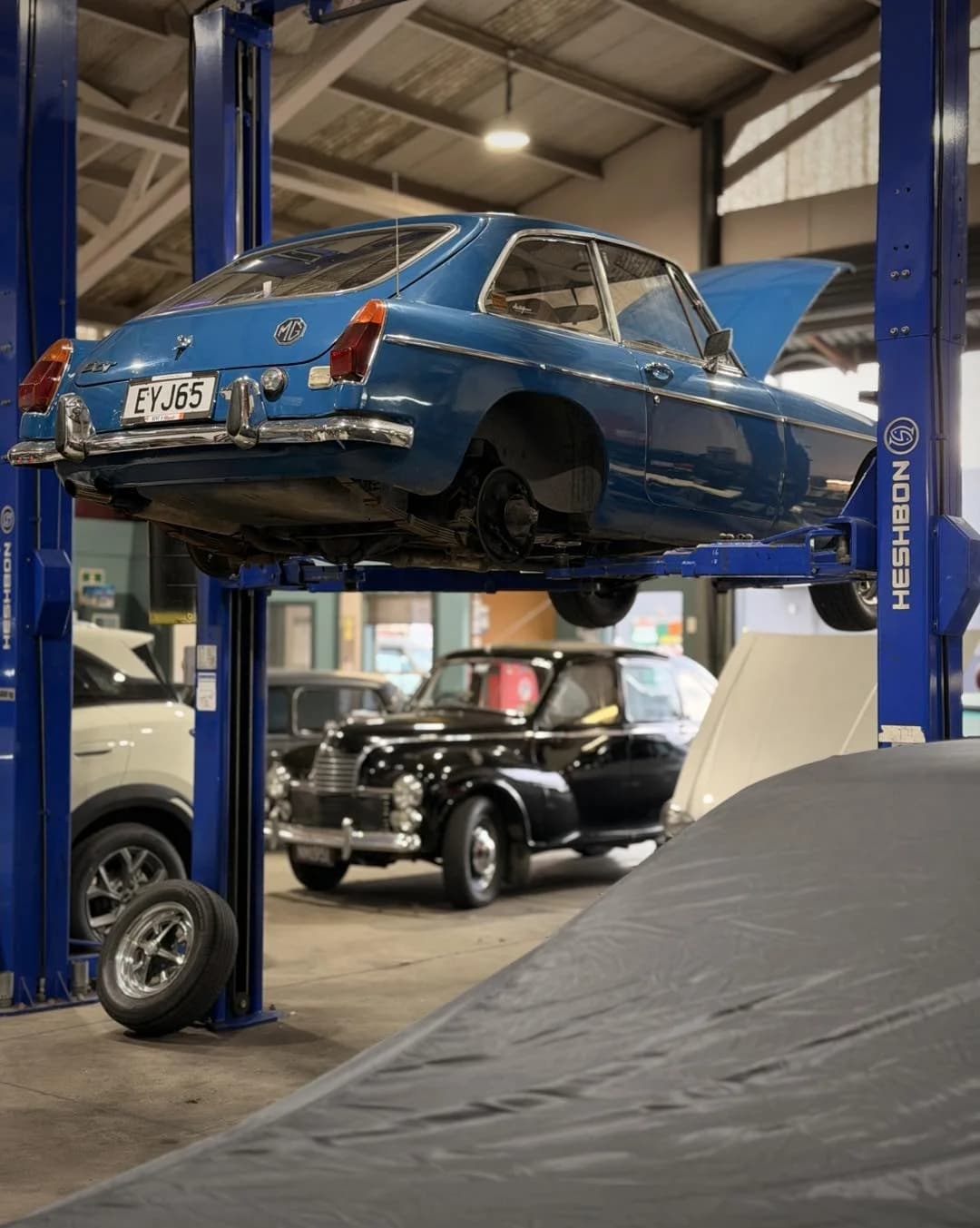
On 16 April 2026, Transport Minister Chris Bishop and Associate Transport Minister James Meager announced the biggest change to the WOF system in decades. From 1 November 2026, newer vehicles start moving to two-yearly WOFs, and that’s not a niche group. It starts with everything first registered on or after 1 November 2019. From 1 November 2027 it reaches back to vehicles first registered on or after 1 November 2013.
Most NZ workshops run on the same flywheel: WOF booking, find the worn parts, quote the repair, send the reminder, see them again next year. This reform cuts the number of turns that flywheel gets. For your newer-car customers, it halves them.
The WOF isn’t being abolished, a large chunk of the fleet keeps annual inspections, and the phase-in runs over two years. But the workshops that do the maths now and adjust their retention model before November will be in a very different position in 2028 than the ones that wait to feel it in the bookings diary.
What’s actually changing (and when)
Here’s the full picture, from the Government announcement and the NZTA Vehicle Inspection Portal:
From 1 November 2026:
- New vehicles get 4 years before their second WOF is due (up from 3).
- Light vehicles aged 4-14 years registered on or after 1 November 2019 move from annual to two-yearly WOFs (motorcycles excluded).
- Vehicles registered before 2000: currently the only ones on six-monthly WOFs, move to annual. Same for pre-2000 motorcycles.
- Light rental vehicles move from six-monthly to annual inspections (these run under the CoF A regime).
From 1 November 2027:
- Two-yearly WOFs extend to light vehicles aged 4-14 years registered on or after 1 November 2013.
What doesn’t change: vehicles first registered between 1 January 2000 and 31 October 2013 stay on annual WOFs, and so does anything aged 14 to 26 years. That’s a big slice of the NZ fleet, and those customers keep coming in once a year, same as now.
The Government puts the net benefit to New Zealand at $2.6-4.1 billion over 30 years, mostly in time and fees saved by vehicle owners, and reports that 74% of consultation respondents supported reducing inspections for lower-risk vehicles. For car owners this is a win: fewer trips, fewer fees.
For workshops, every one of those savings is a visit that used to land in your booking system.
The maths: it’s not the WOF fee you’re losing
The inspection fee was never the money. The money is what the inspection finds.
The MTA puts the current WOF failure rate at 41%, up from 37% in 2017. Two in five inspections turn into a repair conversation on the spot: brakes, tyres, suspension, lights. And even the passes generate work: the "this’ll pass today but won’t pass next time" conversation is where half your forward bookings come from.
Now look at the fleet those inspections come from (Ministry of Transport, 2024):
- New Zealand runs about 4.7 million vehicles in total
- Light passenger vehicles average 15.3 years old
- 43.3% of the light fleet is 15 years or older
Here’s what that means for the reform. That ageing middle of the fleet, the 2000s-registered cars that make up so much of an independent workshop’s book, mostly keeps annual WOFs. What changes is both ends:
- Your newer-car customers (registered after Nov 2019, then after Nov 2013 from late 2027): one visit a year becomes one every two years.
- Your classic and pre-2000 customers: two visits a year becomes one.
- Brand-new cars: the first return visit stretches from 3 years to 4.
Run it against your own book, and treat this as an illustration, because your fleet mix will move the numbers. Say you do 25 WOFs a week, about 1,200 a year, and a quarter of those are on post-2013 vehicles. Once the changes fully bed in, that group generates half its old inspection volume: roughly 150 inspections a year gone. At a 41% fail rate, that’s about 60 fewer moments per year where a customer is standing in your reception with a fail sheet, ready to approve the repair, before you count the pass-but-book-ahead conversations that vanish with them.
And the newer the average car in your area, the harder you’re hit. Workshops in growth suburbs full of 2019-plus utes and SUVs lose more touchpoints than the rural shop looking after twenty-year-old Corollas.
"We’ll just win more WOF customers": the problem with that plan
The obvious response is to chase volume: more WOF customers to replace the lost frequency. Some workshops will make that work, especially where a competitor shuts its lane.
But NZTA lists roughly 3,200 WOF agents in New Zealand, and every one of them is about to be fishing in a smaller pond. Total inspection volume across the country is going down; that’s the entire point of the reform. Market share battles in a shrinking market usually get fought on price, and as we’ve said before about labour rates: when everyone’s undercutting each other, everyone loses.
The more durable answer isn’t more WOFs. It’s making sure the WOF stops being the thing that brings your customers back.
The real shift: from "the WOF brings them in" to "you bring them in"
For decades, NZ workshops have had a retention mechanism most industries would kill for: a legal requirement that puts every customer in front of you at least once a year. It made a lot of workshops passive about retention without ever feeling passive, the customers just kept turning up.
From November, the law does less of that work for you, starting with exactly the customers whose cars are newest and easiest to lose to the dealership. Four things pick up the slack, and we’ve written the full playbook in how to keep customers when WOFs go two-yearly:
- Reminders keyed to service intervals, not WOF dates. A 2021 Hilux doing 15,000 km a year still needs the same oil and brake fluid it needed last year. Every twelve months or every 15,000 km, whichever comes first, restores the touchpoint the law just removed.
- Declined-work follow-up. Under two-yearly WOFs, "she’ll be right until next time" is a twenty-four-month gap with someone else’s workshop inside it. Log every declined item with a follow-up date and chase it at 30 and 90 days.
- Book the next visit before the car leaves. "We’ll see you in twelve months for a service and check-over" costs nothing to say at handover and converts far better than a cold reminder two years later.
- Fix your customer database before November. Per vehicle you need: current contact details, first-registration date (it now decides the WOF schedule), WOF expiry, last service date and odometer, and every declined item with a price.
While you’re in the database, get your own exposure number: count how many vehicles on your books were first registered on or after 1 November 2019, how many between November 2013 and October 2019, and how many before 2000. Those three counts tell you how many inspection visits you stand to lose in 2026, 2027 and beyond, which is a better planning figure than any national average.
Where Hoist fits
This is the problem Hoist was built around. Digital job cards capture every declined item instead of losing it with the paper. WOF and service reminders go out automatically by SMS or email, on the schedule you set, so when WOF frequency halves, your customer contact doesn’t. Rego lookup from official NZ vehicle records fills in vehicle details as you work, so the database cleans itself up, and Xero sync keeps the invoicing side tidy. If you want to see current pricing, it’s on the pricing page.
We’ve written before about making WOF reminders actually work: that whole playbook matters more after November, not less.
The questions you’ll get across the counter
Your customers will hear about this on the news and ask you first. Have the answers ready: it’s a trust moment, and trust is the retention currency you’re about to lean on.
"Does my car still need a WOF?" Yes. Nothing is being abolished. Every vehicle still needs a current WOF; what’s changing is how often it’s inspected.
"My car’s a 2008, what changes for me?" Nothing. Vehicles first registered between 2000 and October 2013 stay on annual WOFs. The two-yearly schedule only applies to vehicles first registered on or after 1 November 2013 (from November 2027) or on or after 1 November 2019 (from this November), while they’re between 4 and 14 years old.
"My car’s a 2021, so I only need a WOF every two years now?" From 1 November 2026, yes: vehicles first registered on or after 1 November 2019 move to two-yearly WOFs while they’re aged between 4 and 14 years. The expiry printed on the current label still stands; the new frequency applies as vehicles come up for renewal.
"So I can skip servicing too?" This is the one to get right. The answer is no. The inspection schedule changed; the wear on the car didn’t. Brake pads, tyres and cambelts don’t read legislation. With a longer gap between inspections, more can go wrong unseen, which is exactly why you’re offering a mid-cycle check or service reminder. Said plainly and without a hard sell, this is how the touchpoint you lost comes back, because it’s true, and customers can tell.
The reform is popular, it’s happening, and it’s good news for your customers’ wallets. Whether it’s bad news for your revenue depends almost entirely on what your retention looks like by this November. The WOF has been quietly doing your marketing for you for decades. From November, that’s your job.
Sources: Beehive: WoF and CoF A changes to save Kiwis billions (16 Apr 2026) · NZTA Vehicle Inspection Portal: Changes to light vehicle inspections from 1 November 2026 · NZTA: Warrant of fitness · Ministry of Transport fleet statistics via EHINZ (2024 data) · MTA on WOF failure rates