Since 1 November 2026, every WoF and CoF A inspection in New Zealand includes a new check: no warning or malfunction light may be showing for the car's Automatic Emergency Braking (AEB) or Lane Keep Assist systems, where they're fitted. It's a small change on the check sheet and a bigger one at the counter. Here's what NZTA has said, what it means for inspectors and workshops, and how to stop it turning into surprise fails and unhappy customers.
Updated 18 November 2026. Based on NZTA's published notices; sources are listed at the end.
The short version
- Applies to WoF and CoF A inspections from 1 November 2026
- Covers AEB and Lane Keep Assist, only on vehicles that have them
- It is a warning-light check, not a test of whether the system works on the road
- A fault light showing for either system now matters at the WoF
- Arrived alongside two-yearly WoFs for many newer cars, so a light can sit on for longer between checks
What NZTA says
NZTA's notice on the light vehicle inspection changes is short: WoF and CoF A inspections "will check that no warning or malfunction indicators are showing for Automatic Emergency Braking (AEB) and Lane Keep Assist systems (where fitted)."
NZTA's August 2026 newsletter for inspectors used broader wording, describing a check for warning or malfunction indicators on any advanced driver assistance systems (ADAS) that "fully or partially assist with steering or movement of the vehicle". The same newsletter said the Vehicle Inspection Requirements Manual (VIRM) and inspection systems would be updated with more detail on ADAS before the change.
Check the VIRM, not a summary
If you're an inspector or run an inspecting organisation, the reasons for rejection that count are the ones in the current in-service WoF and CoF section of the VIRM. Read that section yourself rather than relying on this page or any other summary, including which systems are in scope and how a missing or ambiguous warning lamp is treated.
What the check is, and what it isn't
It is
- A look at the dash for AEB or lane keep warning and malfunction indicators
- Only for vehicles fitted with those systems
- Part of both the WoF and the CoF A from 1 November 2026
It isn't
- A road test or a calibration check of the system
- A requirement for older cars to have AEB or lane keep
The AA has said it is wary of relying mainly on warning-light checks for safety technology, because a system can be out of calibration without showing a light. That's a fair point, and it's one reason workshops still need to calibrate properly after repairs instead of treating "no light" as "working".
Why it matters more now WoFs are two-yearly
The ADAS check arrived in the same package that moved cars aged 4 to 14, registered on or after 1 November 2019, to a WoF every two years. Those are exactly the cars most likely to have AEB and lane keep. With two years between inspections, a fault light that comes on after a minor bump or a screen replacement can sit there for a long time before anyone official looks at it. The WoF is still the moment it gets caught, and the customer won't expect it.
For workshops: what to do now
Add ADAS lights to your pre-WoF and service checklist
Note any AEB or lane keep warning on the dash at check-in, with a photo. If you find it before the inspection, it's a repair conversation; if the inspector finds it, it's a fail sheet.
Know when your own work needs a recalibration
Check the manufacturer's repair information for when the forward camera or radar must be recalibrated, for example after a windscreen, bumper, sensor or suspension job. Build the calibration into the quote, not the comeback.
Decide: calibrate in-house or sublet
Calibration usually needs a capable scan tool, and depending on the vehicle either targets and a level floor or a road drive. If you don't have the gear, line up a calibration specialist and agree a price so you can quote it on the spot.
Tell customers before the WoF, not at it
A one-line note in the WoF reminder ("if a warning light is on, tell us when you book") saves a wasted inspection slot. Customers have heard about two-yearly WoFs on the news; few know about the ADAS check.
Record what you found and what the customer decided
If the customer defers the repair, write it down against the vehicle with a price. With two-yearly WoFs, "next time" is a long way off, and you want the follow-up to be specific.
For motorists: what to check before your WoF
- Start the car and look at the dash once the start-up checks clear. Any AEB, collision warning or lane keep light that stays on needs looking at.
- Keep the windscreen area in front of the camera and the radar sensor (often behind the front badge or bumper) clean and unobstructed.
- If you've had the windscreen replaced or a front-end repair, ask whether the system was recalibrated.
- Tell your workshop about any warning light when you book. It's cheaper to sort before the inspection than to pay for a recheck.
Where Hoist fits
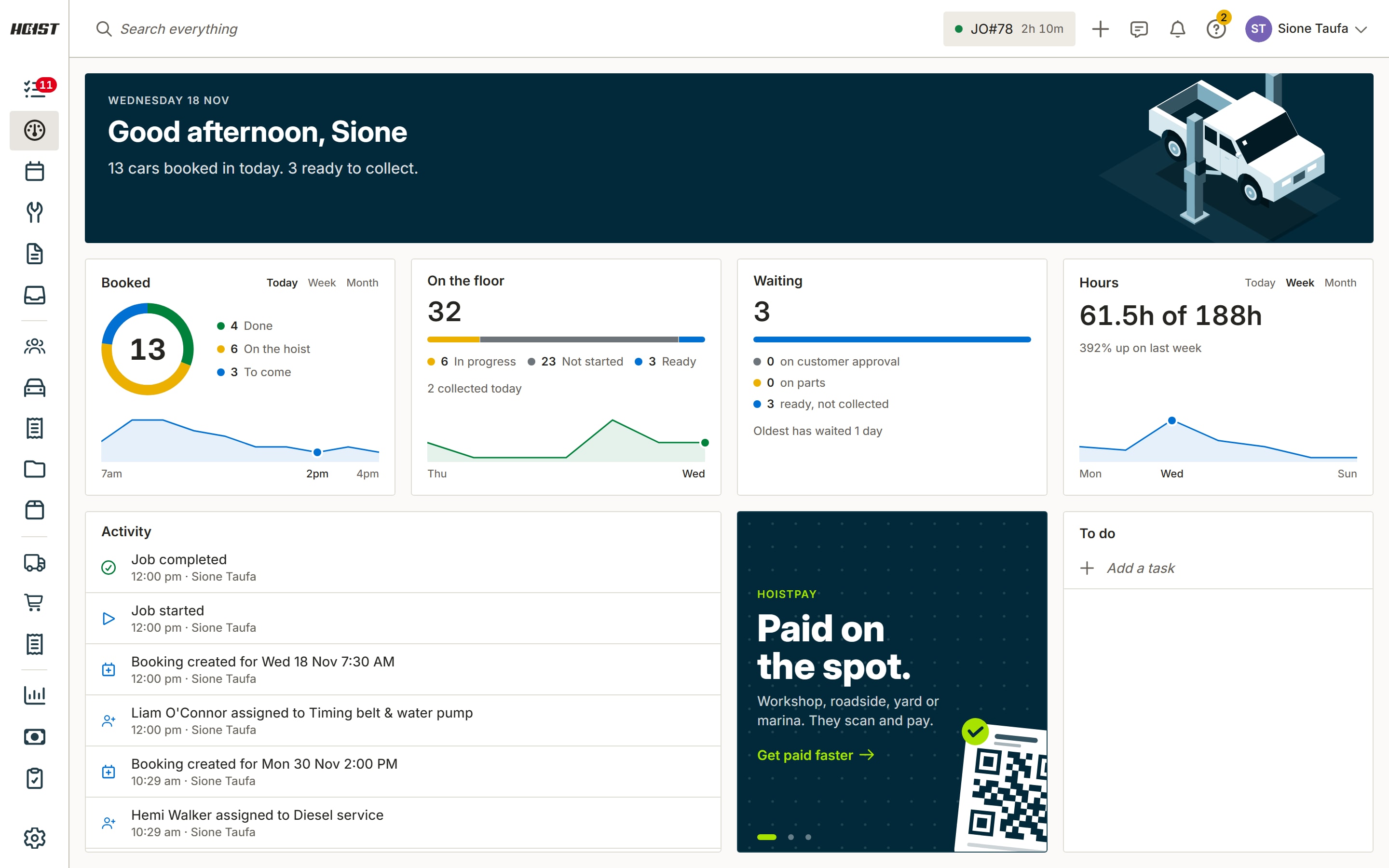
Hoist doesn't calibrate anything, and it doesn't connect to NZTA's inspection system. What it does help with is the paperwork around this check:
- Digital inspections: add an "ADAS warning lights" check to your pre-WoF or service template, mark it Pass, Attention or Fail, attach a photo of the dash, and email the report to the customer.
- Deferred work: if the customer says not now, record the job as deferred. It's saved against the vehicle and shows up on the next work order.
- Reminders: WoF reminders run off the expiry date from the NZTA record, and you can schedule a service reminder to follow up the deferred repair. See WoF and service reminders.
Catch it on the check sheet, not the fail sheet
Digital inspections, deferred work and WoF reminders in one system. $140 + GST a month, 3 users included.
Start Free TrialRelated reading
Sources
- NZTA, Changes to light vehicle inspections from 1 November 2026 (inspection scope: AEB and Lane Keep Assist, where fitted)
- NZTA, Inspection News, issue 22, August 2026 (ADAS wording, VIRM updates to come)
- NZTA, VIRM: In-service WoF and CoF
- AA, What you need to know about changing WoF rules (AA view on warning-light checks)
- New Zealand National Party, Hon Chris Bishop: WoF and CoF A changes to save Kiwis billions, 16 April 2026